
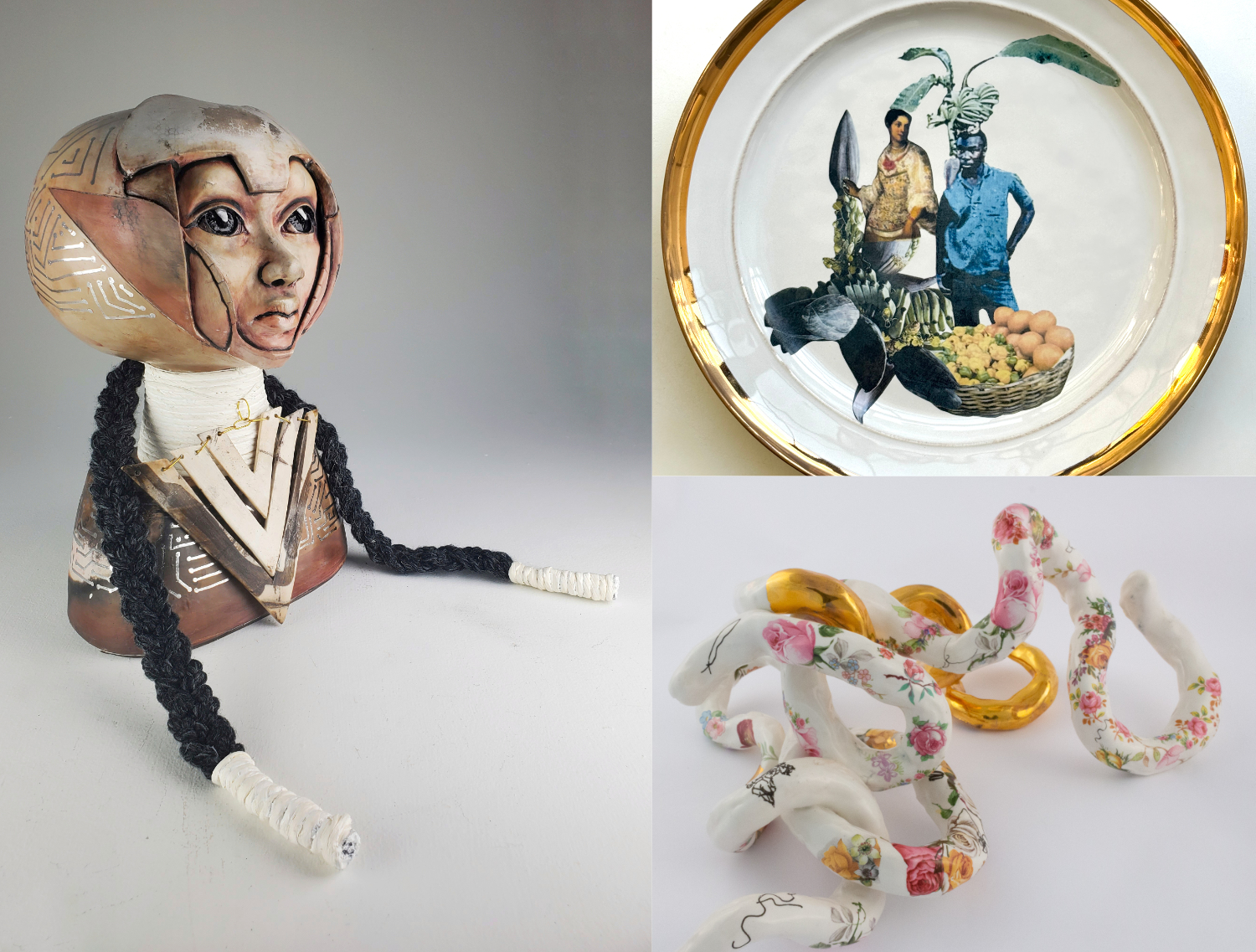
PJ Anderson, Jacqueline Bishop, and Sharon Norwood
After the Island: Ornament and Ceramic Practice in the Jamaican Diaspora
About
The Museum of the African Diaspora (MoAD) presents After the Island: Ornament and Ceramic Practice in the Jamaican Diaspora, a landmark curatorial partnership with Black Artists’ Network in Dialogue (Toronto), Gardiner Museum (Toronto), exploring contemporary ceramic practices shaped by Caribbean histories, memory, and cultural transformation.
Featuring PJ Anderson, Jacqueline Bishop, and Sharon Norwood, the exhibition considers how culture is carried across migration and remade through distance. Each artist approaches Jamaica from a different point along the diasporic continuum: through lived memory, inherited history, or an ancestral connection reconstructed across generations. Their works reveal ornament as a living language, capable of holding what has been remembered, fragmented, lost, and newly imagined.
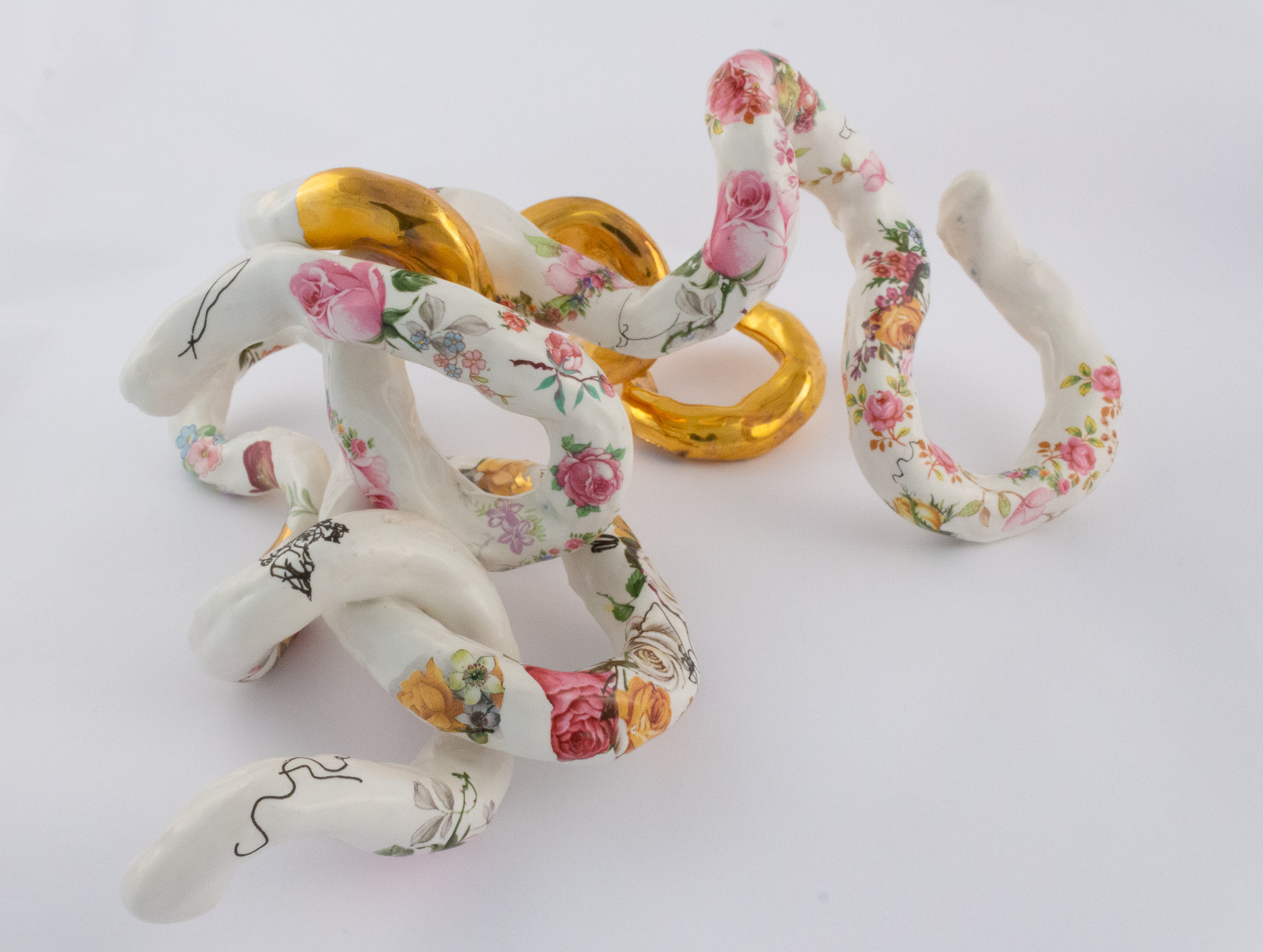
Across porcelain, hand-built vessels, archival imagery, line, pattern, and burnished clay, the artists draw out the entangled histories embedded in ceramic form. European porcelain once projected refinement and imperial power, while African ceramic traditions carried social identity, sacred knowledge, and ancestral presence. In the Caribbean, these visual systems collided and evolved into hybrid languages shaped by colonialism, survival, and invention.
After the Island invites visitors to look beyond decoration and discover what a surface can carry. Here, ornament becomes archive, assertion, remembrance, and a way of making relation. Together, these artists offer a powerful meditation on how ancestral connection survives movement through the creative act of shaping it again.
Joint-Museum Partnership

After the Island emerges out of a collaboration between Black Artists’ Network in Dialogue (Toronto), Gardiner Museum (Toronto), and the Museum of the African Diaspora (San Francisco). Together, the three organizations developed two concurrent exhibitions featuring how artists of Caribbean descent are using ceramics to explore themes of labour, the body, and groundedness from differing perspectives.
The exhibitions propose a broader understanding of Caribbean ceramic practice as a dynamic field shaped by movement, exchange, and cultural continuity. Rather than treating the Caribbean as a fixed geographic location, both exhibitions consider it an ongoing network of relationships extending across national borders and generations. Throughout both presentations, vessels, decorative forms, sculptural installations, and ceramic surfaces become sites where histories are preserved, challenged, reimagined, and carried forward. Clay becomes a medium through which artists investigate how memory survives through material culture and how cultural traditions continue to evolve within contemporary diasporic life.
About the Artists
PJ ANDERSON
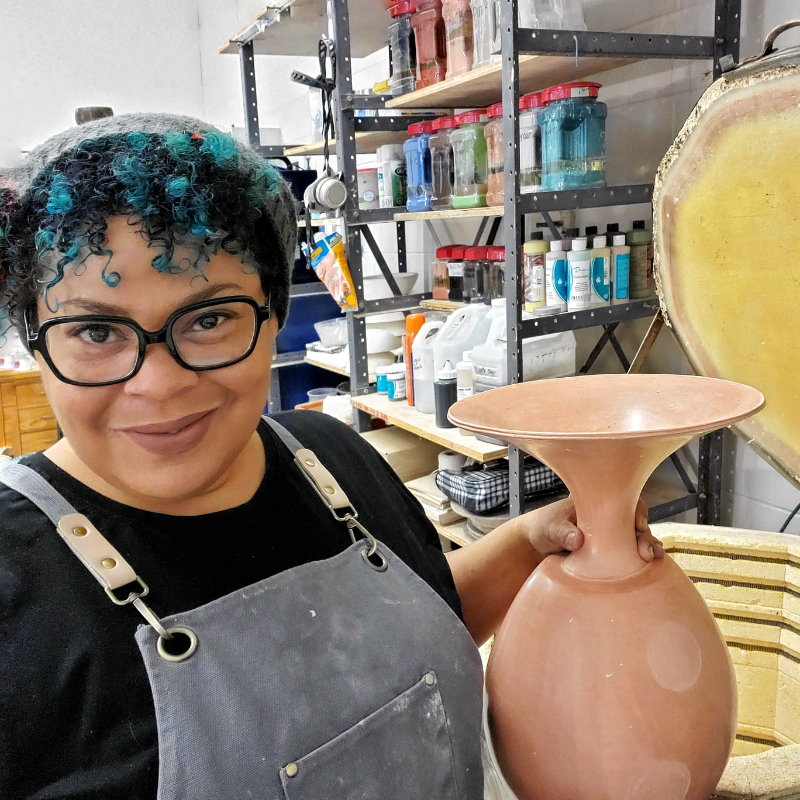
PJ Anderson is a ceramic artist from Thompson, Manitoba, Canada, currently residing in Winnipeg, Manitoba, Canada. PJ has shown Nationally across Canada and internationally, as Resident Artist at the University of KwaZulu Natal in South Africa, where she had previously visited as a Zulu ceramics researcher, China as a finalist in the International Ceramic Magazine Editors Associations (ICMEA) emerging artist competition, the United States. She teaches at the Winnipeg Art Gallery Studio Program and is currently a graduate candidate at the University of Manitoba and Director at Large for NCECA.
PJ Anderson's practice is deeply influenced by her interest in the traditional uses of clay across cultures. While much of the contemporary ceramic dialogue has focused on the traditions of Europe and Asia, she is drawn to the ceramic practices of Africa and the Americas. Her work explores the expressive potential of burnished, smoke-fired surfaces, continually pushing the range of textures and finishes these techniques can achieve. The forms she is currently creating are studies in silhouette and negative space, emphasizing the relationship between the smoke-fired surface and the simplicity of sculptural form.
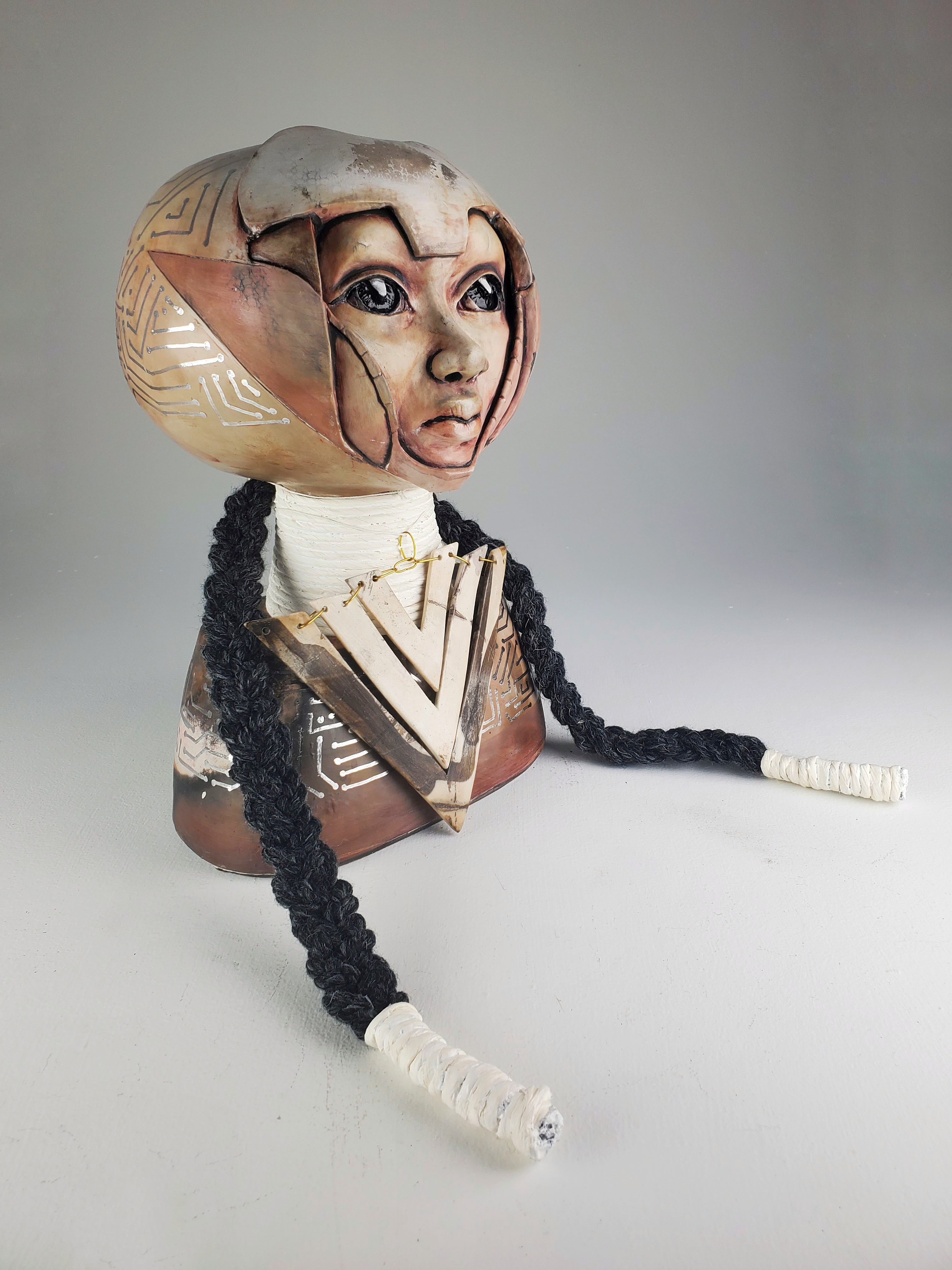
Her woven works, alongside her smoke-fired ceramics, extend the same principles of construction found in her ceramic practice. Because most of her ceramic pieces are hand-built using the coil method, weaving with coiled fibers offers another way to explore similar forms through a different medium. These two practices inform one another and are inherently self-referential. By combining the permanence of fired clay with the softness and flexibility of fiber, her work highlights both the contrasts and the connections between these materials, revealing a shared language of form, process, and structure.
JACQUELINE BISHOP
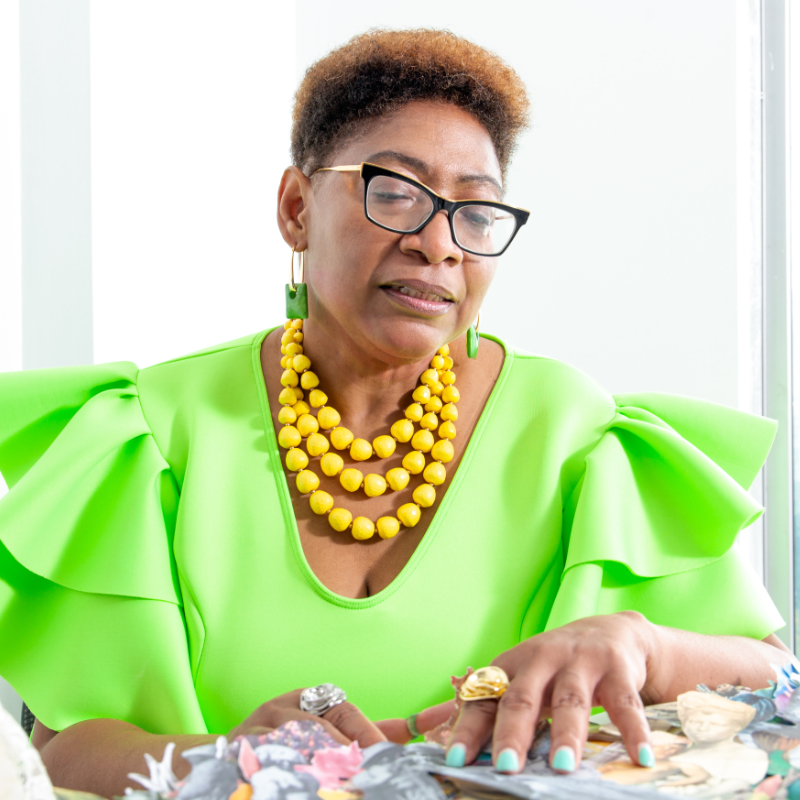
Jacqueline Bishop (b. 1971, Kingston, Jamaica) is an accomplished writer, academic, and visual artist with exhibitions in Belgium, Morocco, Italy, Cape Verde, Niger, USA, and Jamaica. In addition to her role as Clinical Full Professor at New York University, Jacqueline Bishop was a 2020 Dora Maar/Brown Foundation Fellow in France; 2008-2009 Fulbright Fellow in Morocco; and 2009-2010 UNESCO/Fulbright Fellow in Paris. Bishop has received several awards, including: the OCM Bocas Award for her book “The Gymnast & Other Positions”, The Canute A. Brodhurst Prize for short story writing, The Arthur Schomburg Award for Excellence in the Humanities from New York University, A James Michener Creative Writing Fellowship, as well as several awards from the Jamaica Cultural Development Commission.
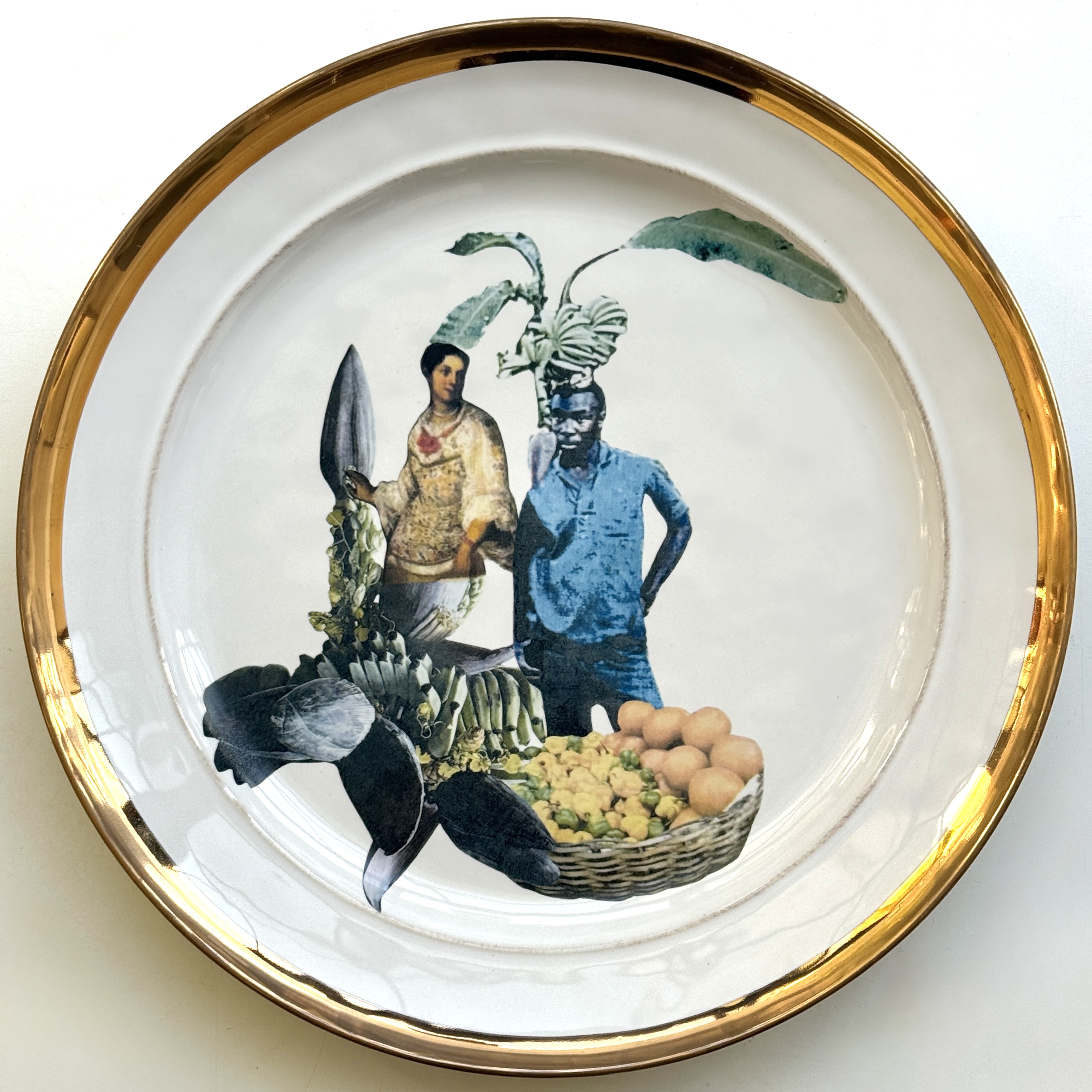
Jacqueline’s recent ceramic work consists of brightly colored bone China plates used symbolically in Caribbean homes and explores how they hid the violent legacy of slavery and colonialism in the Atlantic world.
ON HER WORK
My work focuses on making visible the invisible, in making tangible the ephemeral, in speaking aloud the unspoken, and in voicing voicelessness. In so doing, I engage with such themes as pleasure, desire, sexuality, memory and exile (and their concomitant absence, loss, erasure and silence). My practice is interdisciplinary and increasingly trans-disciplinary. As someone who has lived longer outside of my birthplace of Jamaica, than I have lived on the island, I am acutely aware of what it means to be simultaneously an insider and an outsider. This ability to see the world from multiple psychological and territorial spaces has led to the development of a particular lens that allows me to view a given environment from a distance.
Because I am also a fiction writer and poet as well as a visual artist, the text and narrative are significant parts of my artistic practice.
SHARON NORWOOD
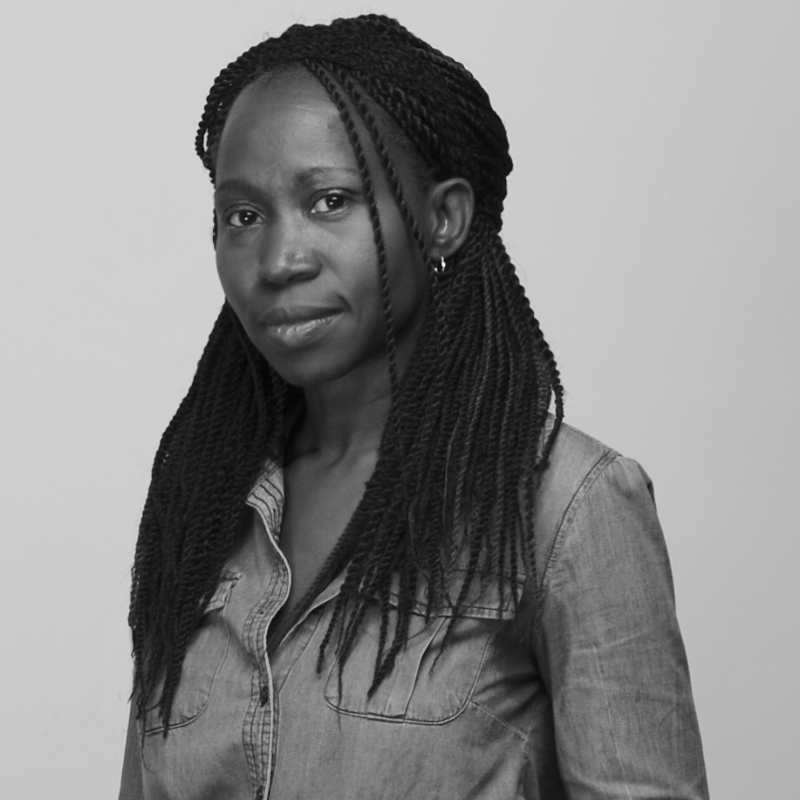
Sharon Norwood is a Jamaican-born interdisciplinary artist whose practice spans ceramics, drawing, found objects, and installation. Through material exploration and process-based experimentation, her work engages with race, labour, identity, and historical narratives, often examining how systems of power shape cultural memory and ways of seeing. A recurring motif in her practice is the curly line, which functions both as a formal gesture and a conceptual reference to Afro-textured hair and the Black body.
Norwood holds a BFA from the University of South Florida and an MFA in Studio Art from Florida State University. Her work has been presented in exhibitions, installations, and public programs across Canada, the United States, Jamaica, and Germany. She has participated in residencies, research programs, and visiting artist initiatives at the Banff Centre for Arts and Creativity, McColl Center for Art + Innovation, Vermont Studio Center, Alfred University, and the Château de La Napoule Art Foundation.
Her work is held in public and private collections, including the Gardiner Museum, Telfair Museums, National Museum of Women in the Arts, Washington and Lee University Museums, and the corporate collection of TD Bank Group.
Tickets to visit MoAD and view the exhibitions:
Made possible by
After the Island: Ornament and Ceramic Practice in the Jamaican Diaspora is made possible through the leadership support of KHR McNeely Family Foundation.
Major support is provided by Andrew W. Mellon Foundation, CommonSpirit Health, and San Francisco Grants for the Arts.
Significant support is provided by Jill Cowan and Stephan Davis, Crankstart Foundation, Gilead Sciences, Salesforce, and Westridge Foundation.
Generous support is provided by CSAA Insurance Group and San Francisco Foundation.